

The bFaaaP story
From one person’s wish — to a foot-free piano pedal that anyone can build.
bFaaaP began with a simple, stubborn wish: that someone who can’t use a foot pedal should still be able to play the piano with the full voice of the sustain.
Over several years and many prototypes, the idea grew from a hand-made experiment into two refined hardware lines and a single iOS app — and then into a fully open-source project, so that anyone, anywhere, can build one.
The name says it: bFaaaP — barrier-Free assist as a Pedal. A small tilt of the head, read by on-device AI, becomes a pedal press over Bluetooth.
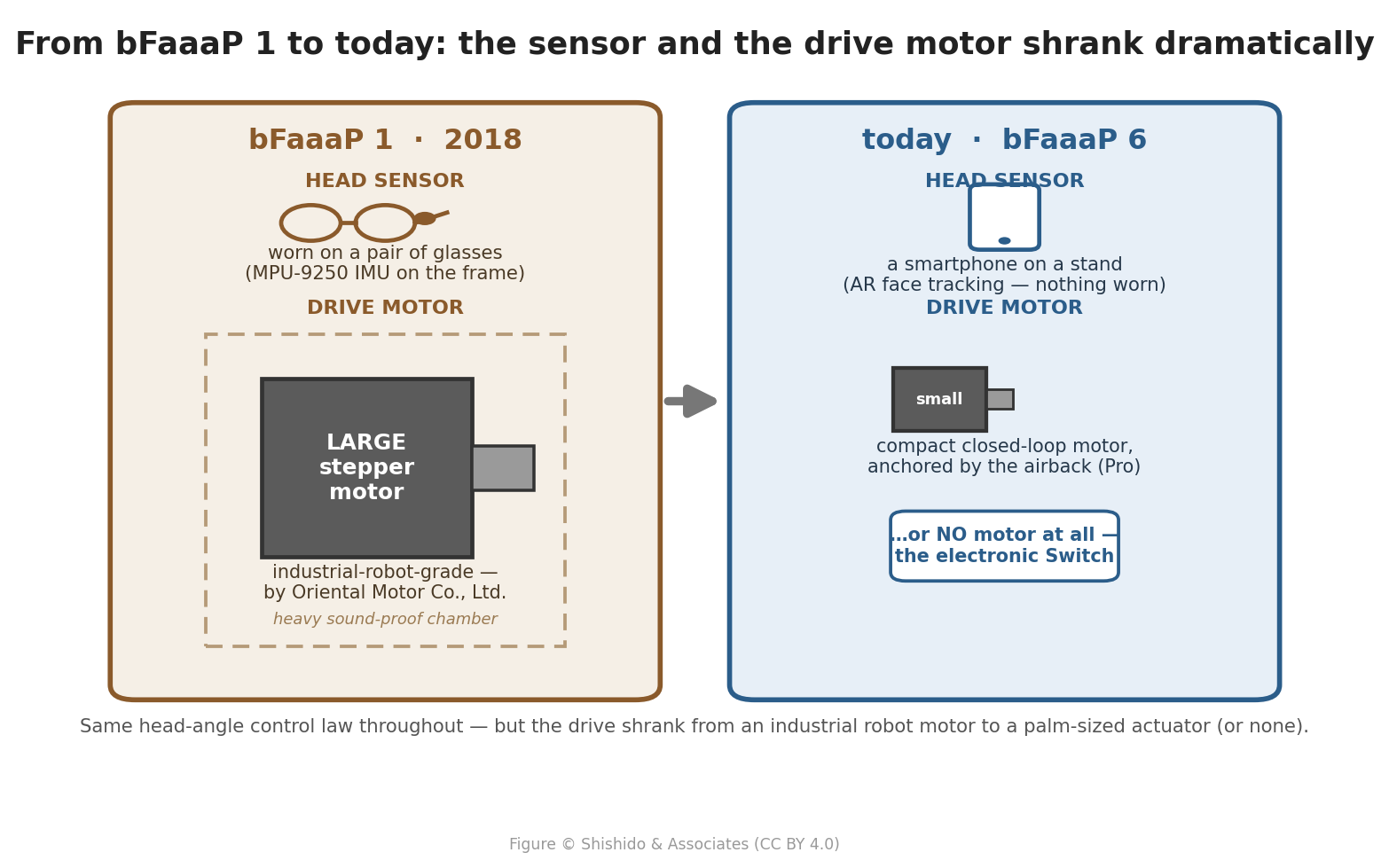
Where it began — bFaaaP 1 (2018)
The very first prototype already held the invention: the same head-angle control law (offset + multiplier) drives the pedal today. Only the engineering shrank dramatically.
- Sensor: a head-angle sensor worn on glasses (design-registered) → today a smartphone, with nothing worn.
- Drive motor: a large stepper motor by Oriental Motor Co., Ltd. → a palm-sized closed-loop motor (Pro), or no motor at all (Switch).
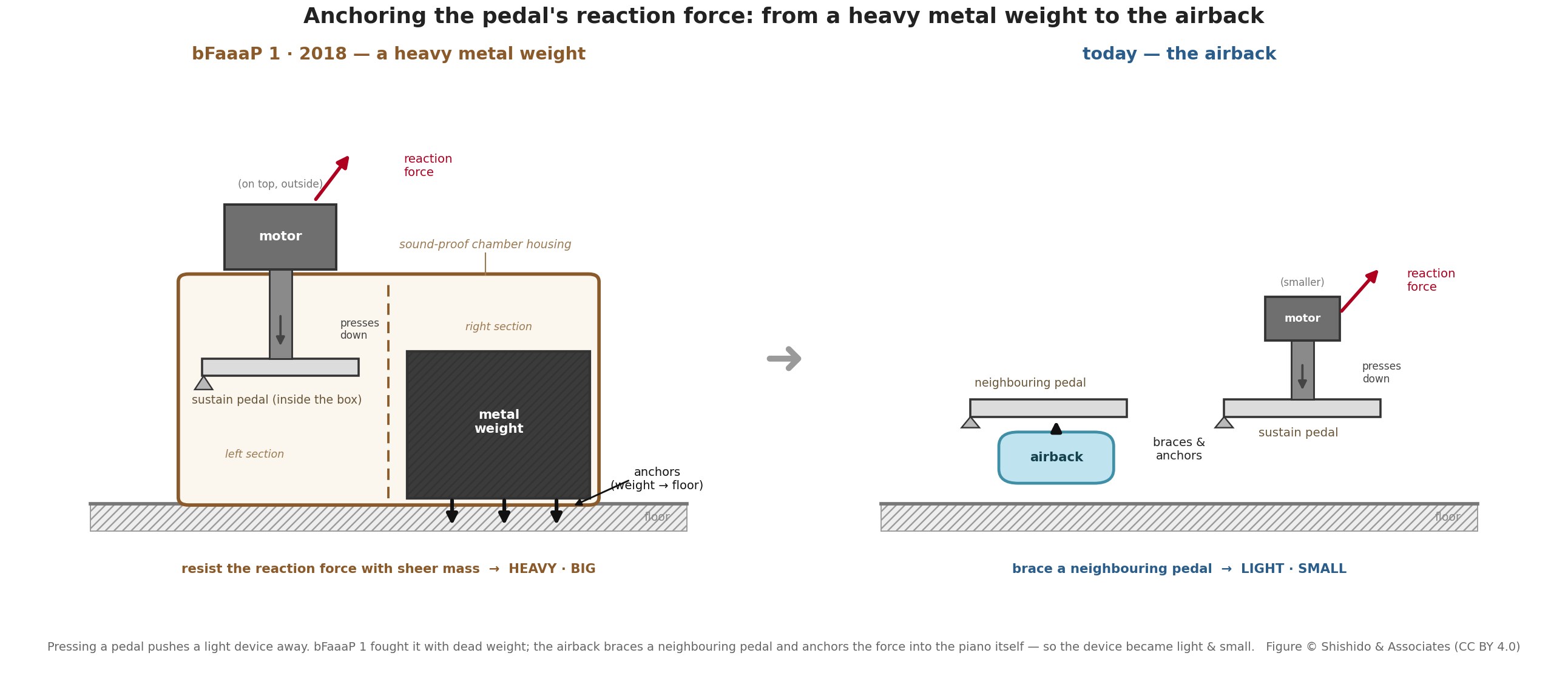
- Anchoring: metal weight packed into a bottom compartment of a sound-proof chamber → the pneumatic airback, bracing against a neighbouring pedal.
Messages from the engineers
The makers of the pedal device, firmware and electronics — in their own words.
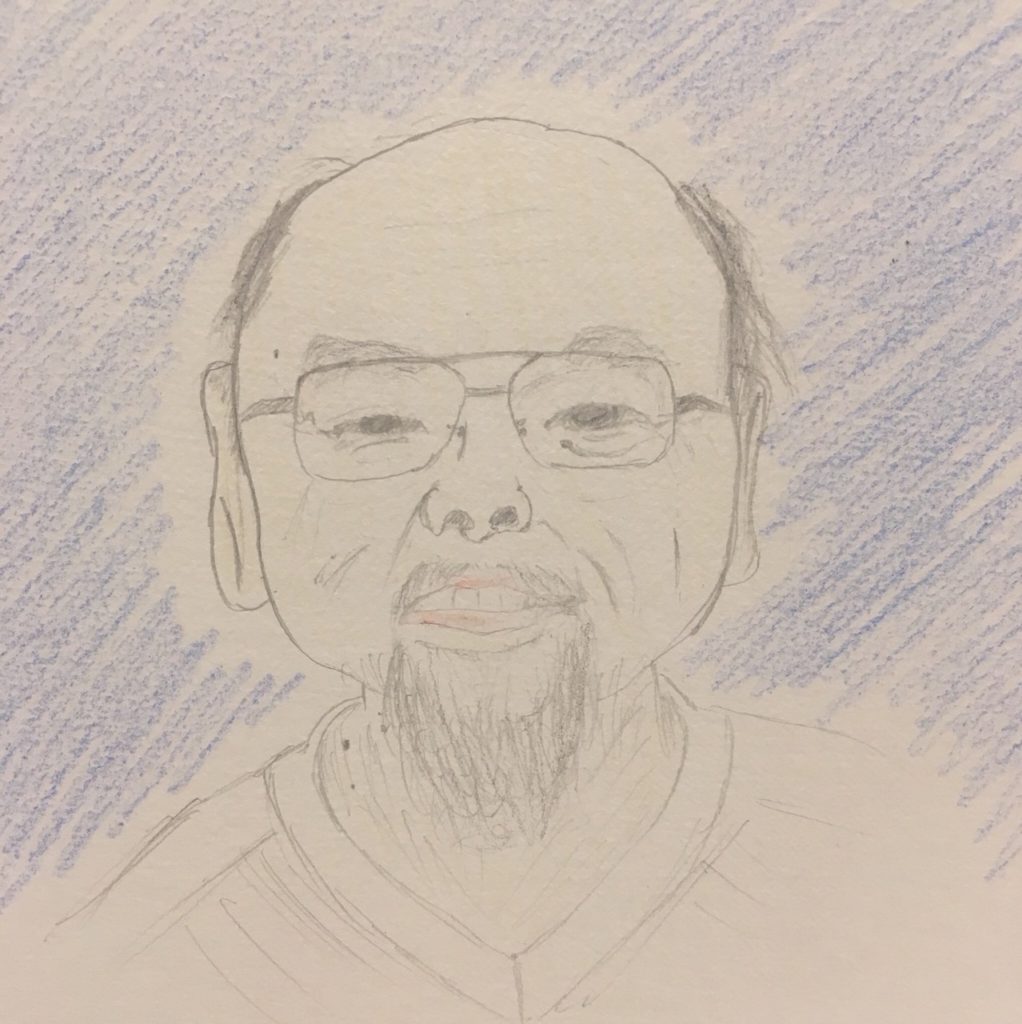
Hiroyuki Narusawa
Pedal device / firmware
Toward the Open Source Project launch
At first this project seemed simple, but once we actually started, all sorts of factors became entangled, and even now it hasn’t reached a finished state. Through open-sourcing it, I hope many people will get to know the project and use it as a stepping stone, so that improvement ideas, cost reductions, and new approaches will keep emerging.
Put simply, it comes down to these three elements:
1) How to sense body movement other than the feet in order to press the pedal;
2) The means to send that sensed data to the device quickly;
3) Using the data sent from the sensor to press the pedal quickly and quietly.
Something like that.
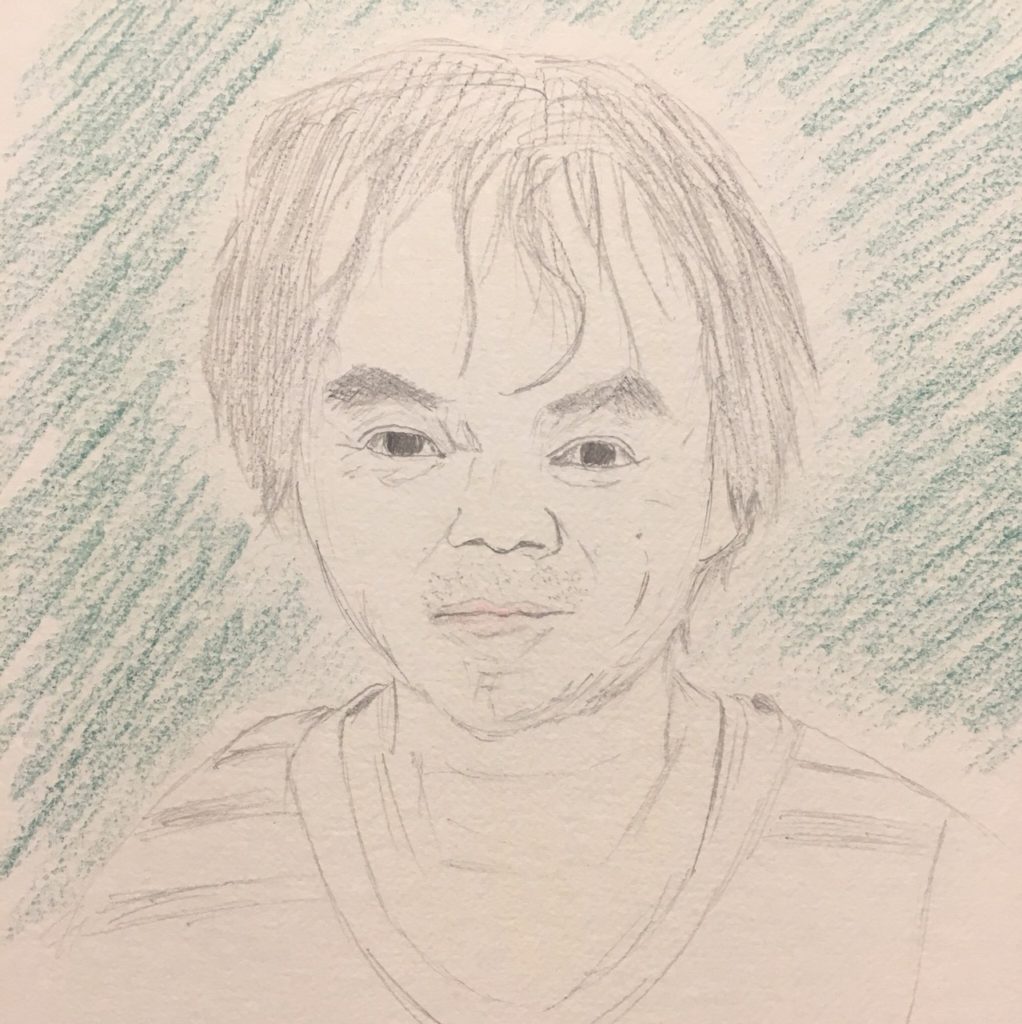
Masahiro Ootaki
Design & coordination
It was in 2008 that I was asked to remodel a new home to make it barrier-free, and my relationship with Mr. Shishido continued from there. On New Year’s Day 2018 he invited me: “I’ve started learning the piano and want to enjoy playing it even more. Let’s develop a pedal system together so that a wheelchair user can play too.”
That said, as someone whose trade is architecture I had no engineering skills, so I immediately consulted my mentor, Mr. Narusawa, and two weeks later the two of us visited Mr. Shishido’s home. Reading the introductory app-development book he recommended, drawing figures for the patent application, visiting the Patent Office — one experience after another that I had never had before kept coming.
In my own daily work in architecture, I too want to pass on to the young people who follow the techniques I learned from those before me — so I nodded deeply at the policy that “the knowledge gained from bFaaaP should be shared with everyone.”
“Products that bring joy to all kinds of people, developed by all kinds of people” — with this open-sourcing as a starting point, I hope it develops even further, drawing in companions not only in Japan but all over the world.
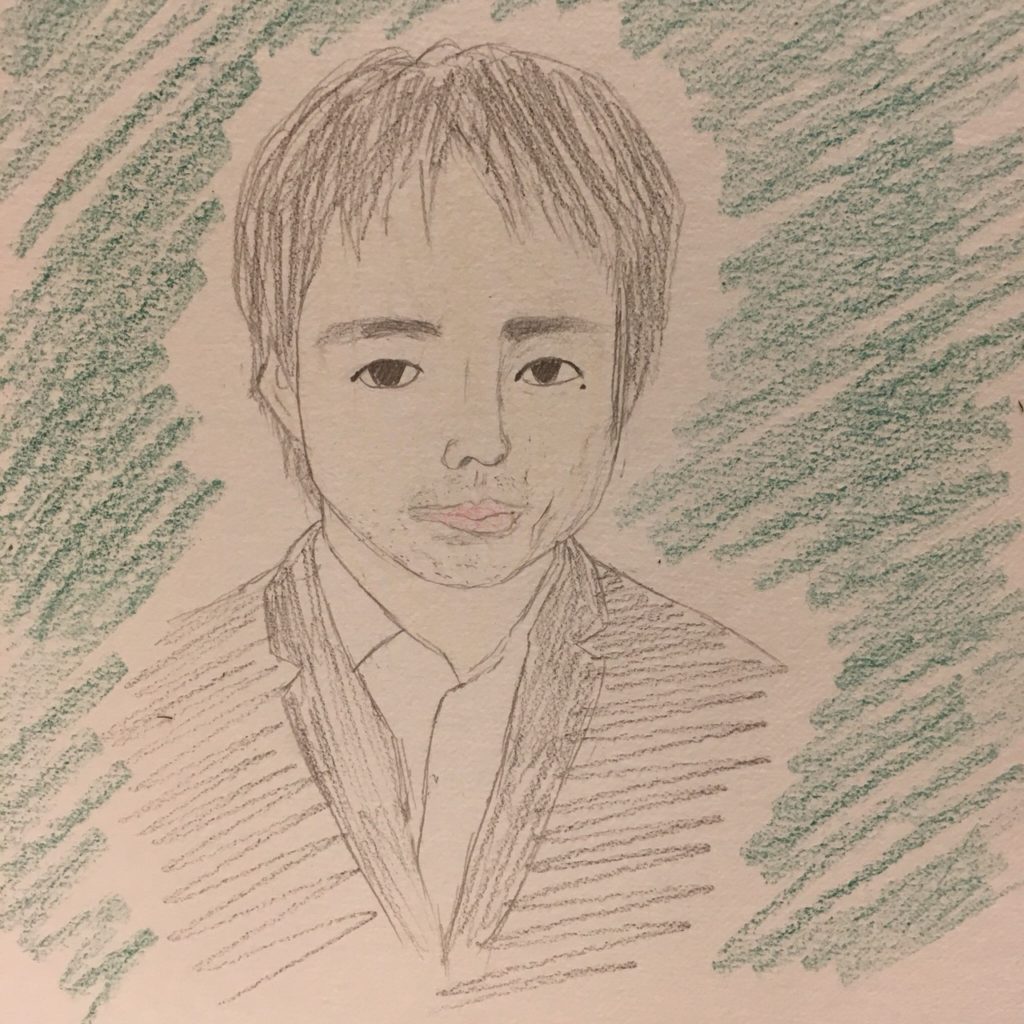
Daisuke Tokushige
Intellectual property
It is deeply moving to see the bFaaaP technology — which I was glad to support on the intellectual-property side — being shared with the world as open source.
A mechanism that lets you control the pedal exactly as intended, in time with your own head movements, is truly groundbreaking.
As a member of the project, I hope bFaaaP reaches many more people and leads each of them to the free playing experience they envision.
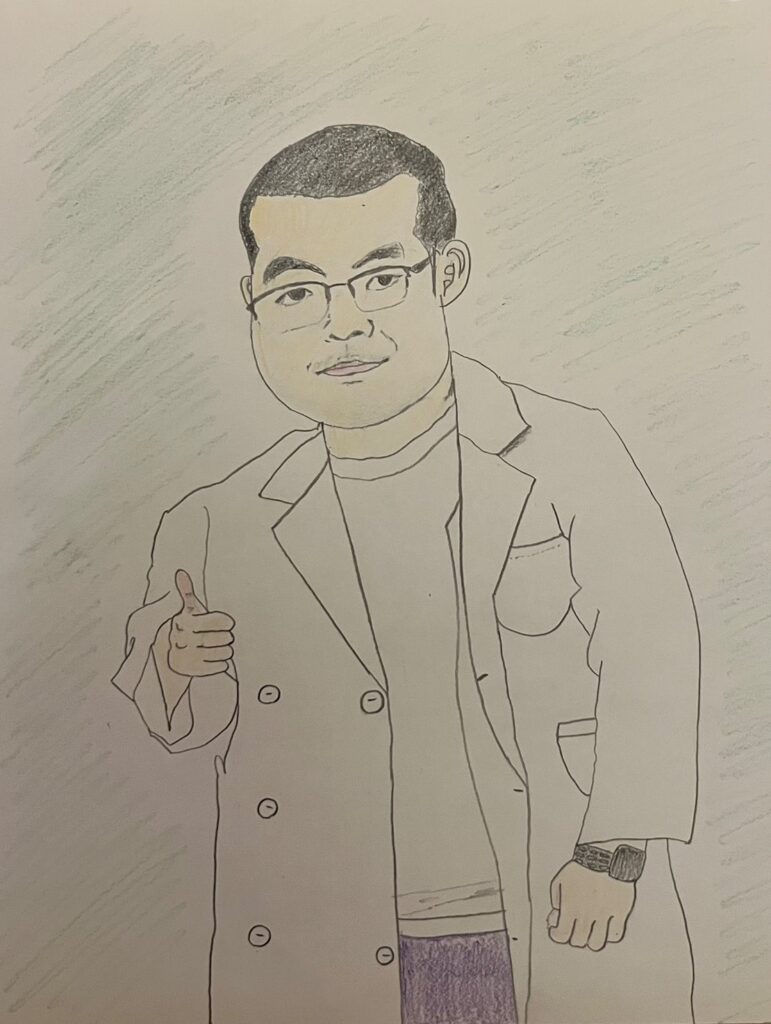
Taguchi
Software engineering
Congratulations on going open source. I’m glad my materials could be of some small help.
Now that it’s open source, I think the door has been opened for anyone who wants to “drive a motor in response to head movement” to freely apply it beyond the piano as well. It also becomes possible for people outside the bFaaaP members to implement new features and fix bugs. I hope the project keeps gaining momentum.
On a personal note: I recently started learning the piano. I’m practising so I can play “Canon.” I’ve only just begun, so I haven’t yet practised with the pedal — but as a bFaaaP user too, I want to keep enjoying it and improving my skills so I can add improvements even after it has gone open source.
Haruto Tanaka
Electrical engineering
Congratulations on going open source.
With this as a starting point, I hope the work bFaaaP has been developing for years will grow even further — drawing in friends and volunteers not only in Japan but around the world.
Going forward, I’d also like to work together with the Platanus society, and to put effort into spreading the word, so that bFaaaP’s work reaches people from all walks of life.