

Open source · AI assistive instrument
Play the pedal with a tilt of your head.
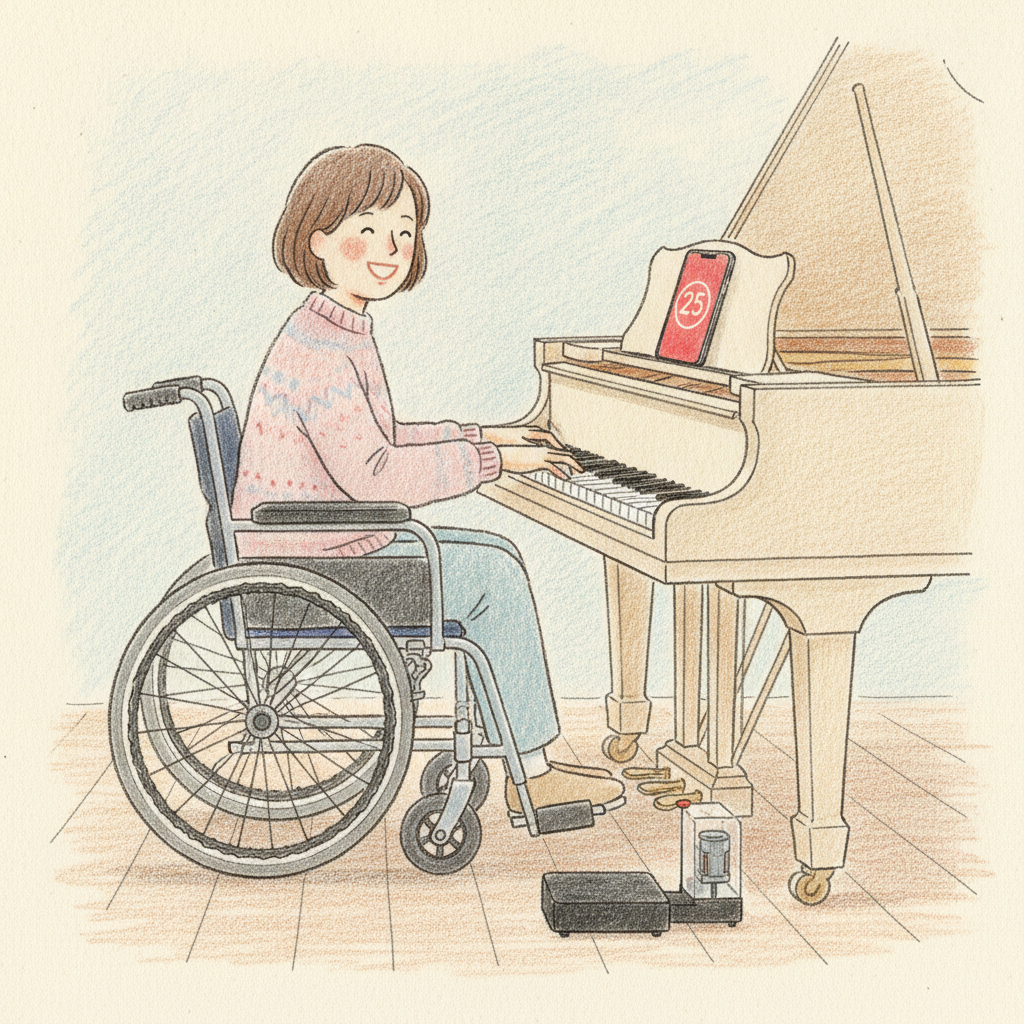
bFaaaP — barrier-Free assist as a Pedal — is an open-source AI assistive piano-pedal system. An iPhone or iPad reads your head angle with on-device AI and presses the sustain pedal over Bluetooth. No feet needed — and you can build it yourself.
iOS · Bluetooth · Raspberry Pi Pico — docs in English, 日本語, Deutsch.
Latest news
Piano recital 2026, at Musicasa
On August 7, 2026, bFaaaP joined the recital of Kyoko Yamaguchi’s piano studio Fleur at Musicasa in Yoyogi-Uehara, Tokyo. The full performances — and a walkthrough of setting up the Pro — are now on video.
Programme
- 0:00“Etupirka” (Taro Hakase) — played by Dr. Tomo Shishido
- 3:39“A Whole New World” (Alan Menken) — played by Mr. Haruto Tanaka
- 8:11Setting up bFaaaP Pro, step by step
Embedded in YouTube’s privacy-enhanced mode: nothing is sent to YouTube until you press play.
After the recital
The team around one table after the recital, August 7, 2026.
Published with the consent of everyone shown. Please do not download, copy, redistribute or repost this photo.
If you appear in this photo and would like it changed or taken down, write to shishid@saaipf.com and we will act on it promptly.
Poster
Poster — please print and share
Here is the bFaaaP open-source poster (front & back). Please feel free to print and share it.
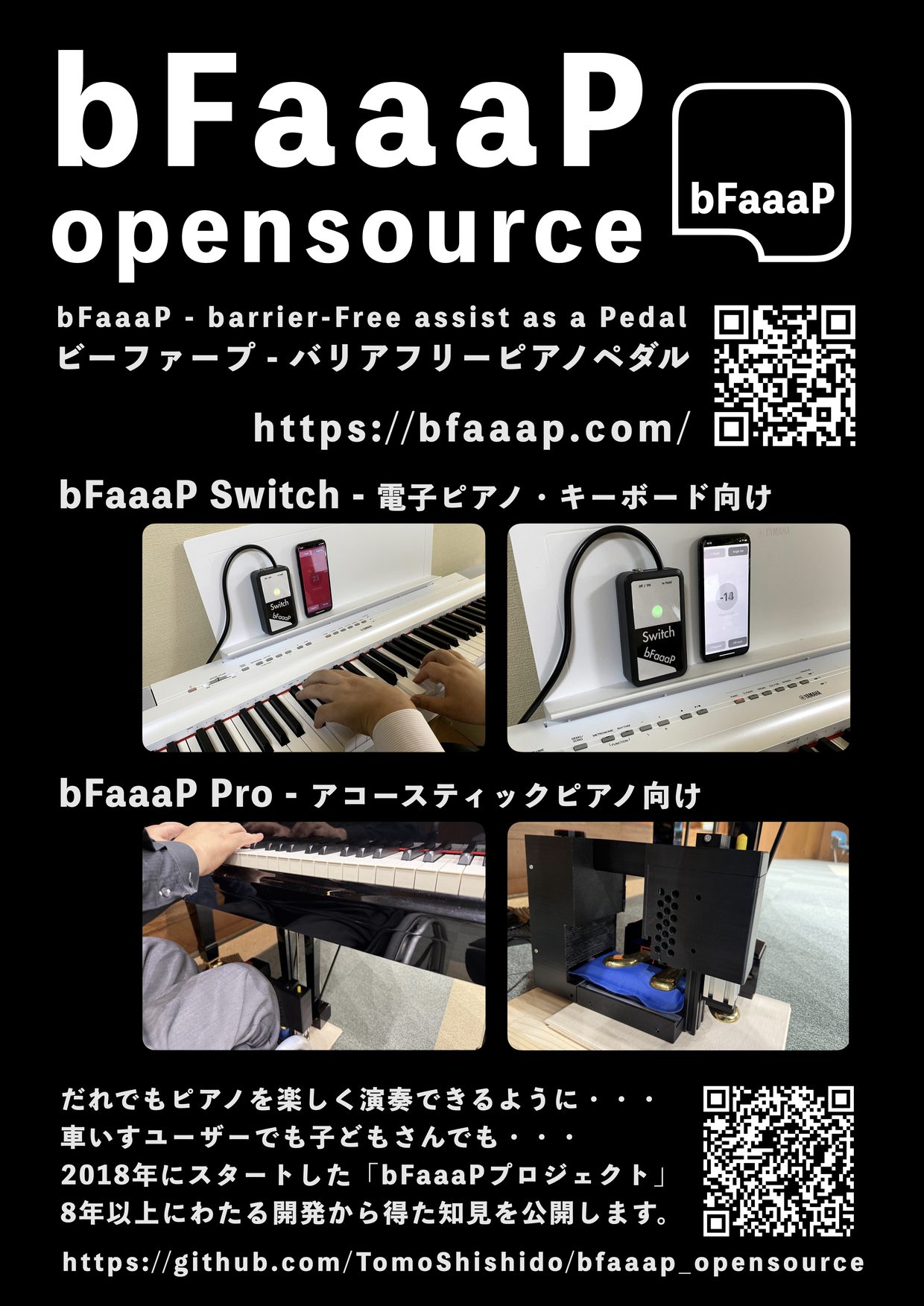
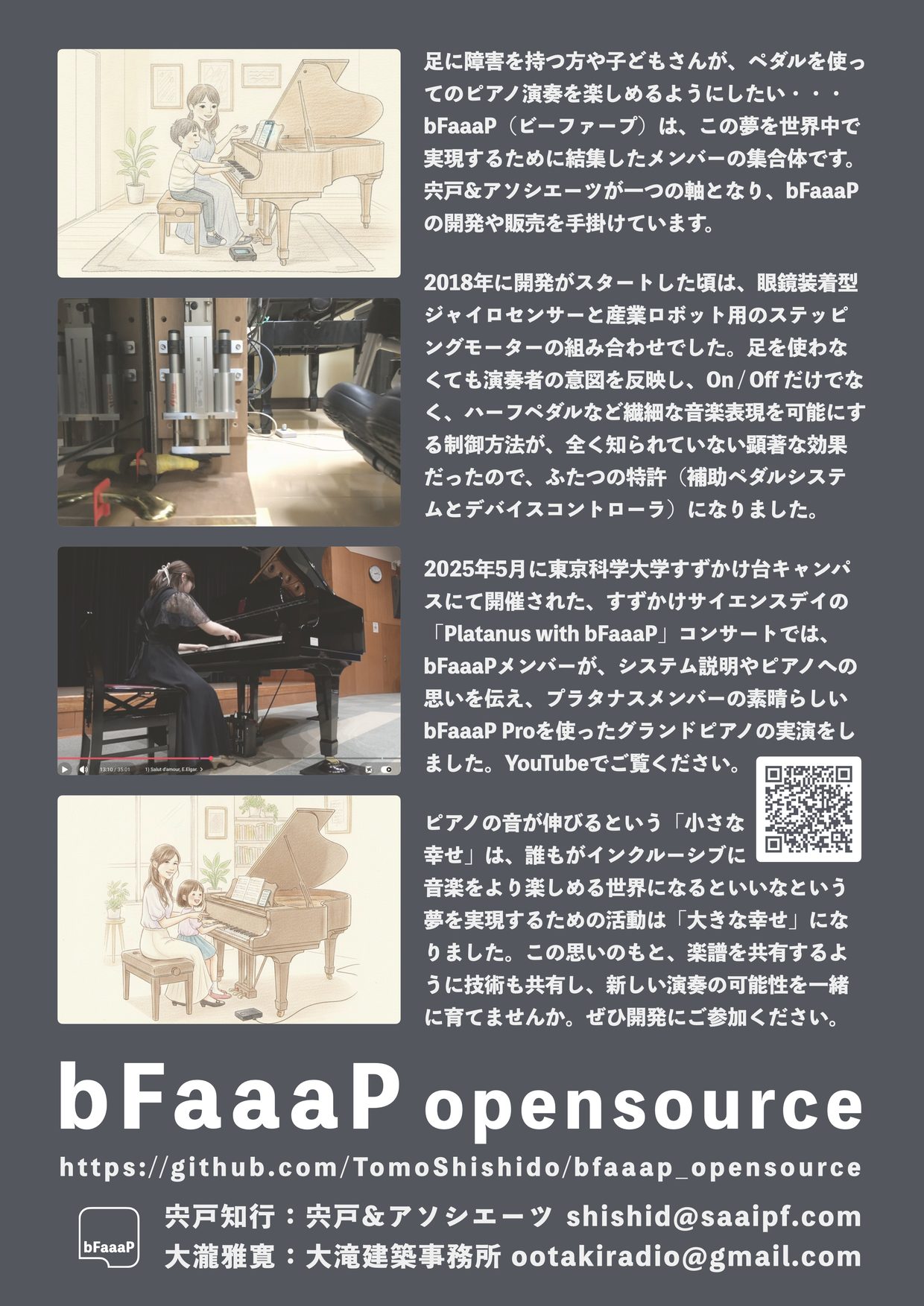
Poster design: Masahiro Ootaki (Ootaki Architects Office)
📅 On Friday, July 31, 2026, thanks to the kind support of the Tokyo Women’s Choral Society, this poster was handed out at their “Composer Exhibition Series Vol.6: Hideki Chihara” concert. We are grateful for the chance to have shared our story there.
Concert details ↗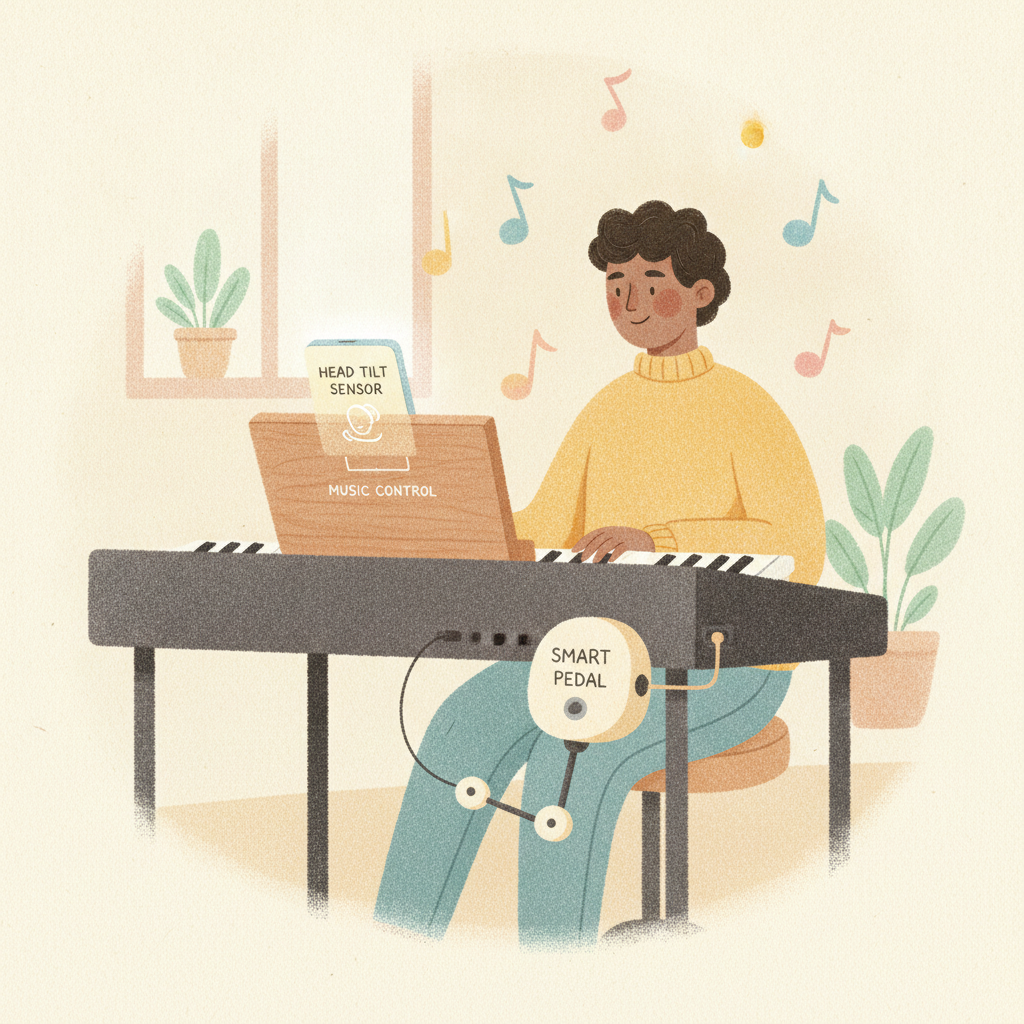
What is bFaaaP?
A small head movement becomes a pedal press. You preset just two things — your threshold (how far to tilt) and a multiplier (sensitivity) — and together they set how fast the pedal follows you, so the pedalling is tuned to you, not a crude on/off. This quantitative, tunable law is the key that turns a head tilt into your own intended, natural pedalling (and it is what made bFaaaP patentable). It lets people who can’t easily use a foot pedal play the piano with the full expressive power of the sustain.
- Your threshold and multiplier
- Calibrate the tilt angle and multiplier; together they set how fast the pedal follows you, so it feels like yours.
- On-device AI
- ARKit / TrueDepth face tracking runs on the iPhone or iPad — no cloud, low latency.
- For everyone
- Built with and for players who can’t use a foot pedal — and open to all.
Two hardware lines, one app
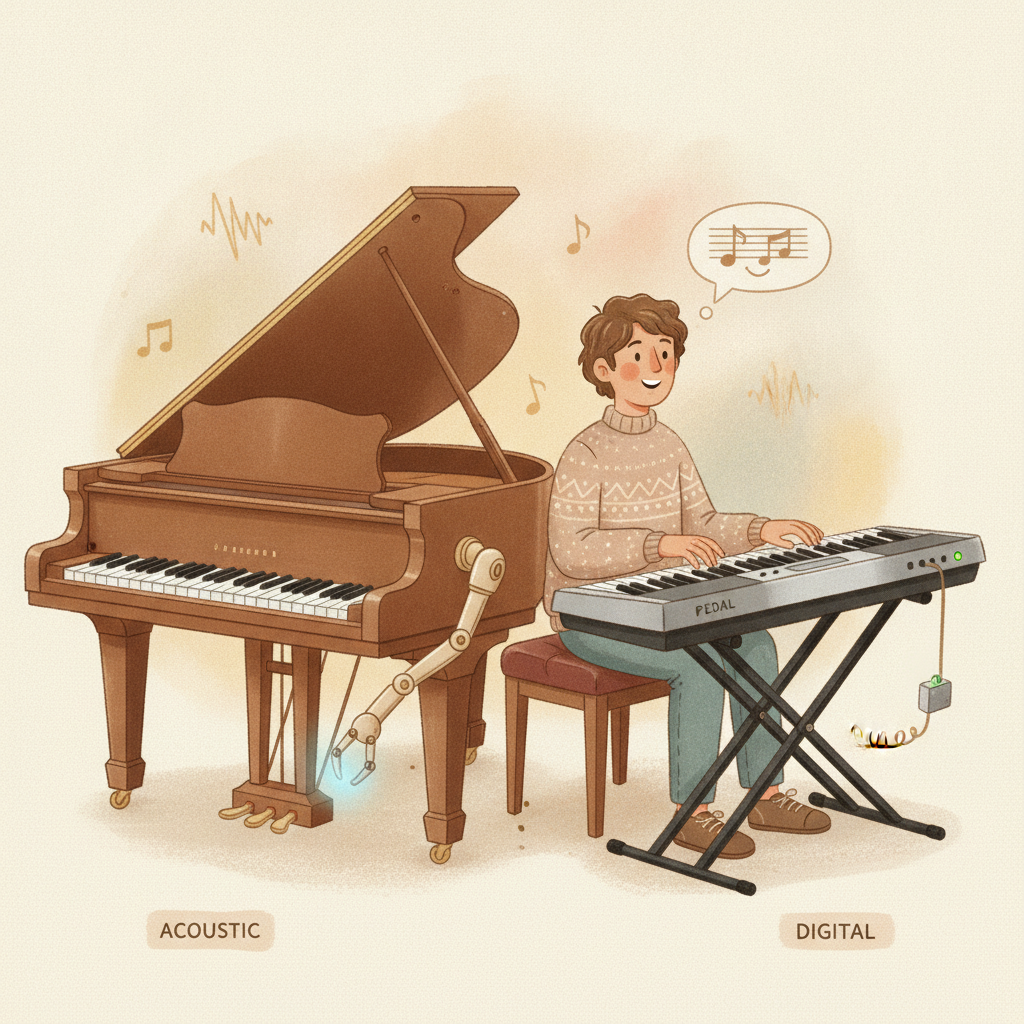
The same iOS app drives both lines and the Bluetooth protocol is identical. Pick the line that matches your piano.
bFaaaP Pro
For acoustic pianos (grand & upright)
A motor physically presses the sustain pedal, anchored by an “airback” air-cushion.
bFaaaP Switch
For electric pianos & keyboards
Plugs into the sustain-pedal jack as an electronic switch — no motor or airback.
Messages from musicians
Pianists, a tuner and a composer who play with bFaaaP — in their own words.

Kyoko Yamaguchi
Piano teacher · studio Fleur
Congratulations on the open-source release. As a piano teacher I’m glad to be part of this wonderful project — I believe music should be for everyone, and I hope bFaaaP encourages more people who want to play. My piano studio offers lessons with bFaaaP, including home visits — if attending in a wheelchair has been hard and you’d given up on lessons, please feel free to ask. And you can perform with bFaaaP at our recitals: I’ll support each person’s wish to play on stage.
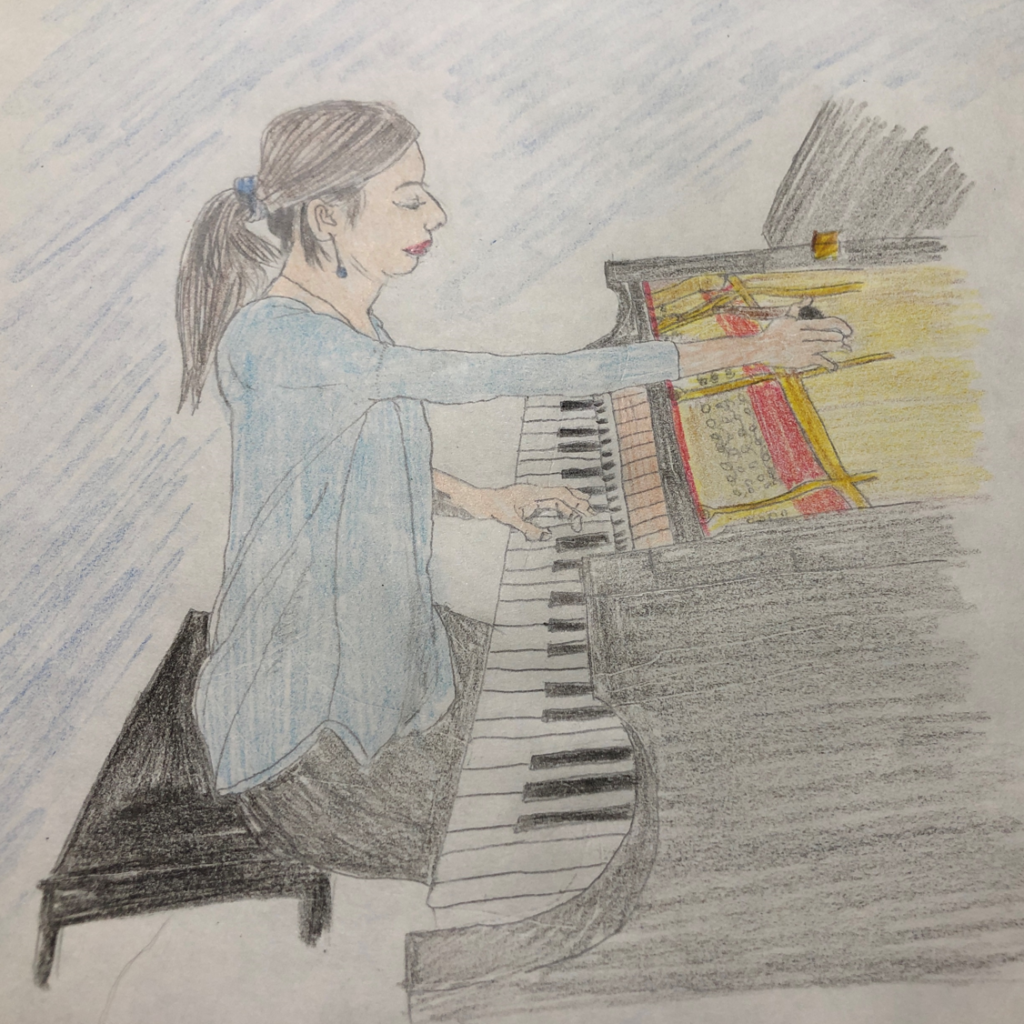
kana
Piano tuner
Pedalling is very delicate: pressing the pedal too far can muddy a phrase and lose the beauty of the harmony. bFaaaP is a wonderful device that renders that fine pedal control not with the toes but through how you tilt your head and how fast — letting the player express their music more richly and precisely.
The piano is an instrument that anyone in the world can enjoy. As a piano tuner myself, I am deeply impressed that bFaaaP makes such a wide range of playing possible without placing any burden whatsoever on the piano’s action. And with this open-source release, I dearly hope that many more people will come to know bFaaaP, and that it can reach even a few of those who feel some inconvenience.
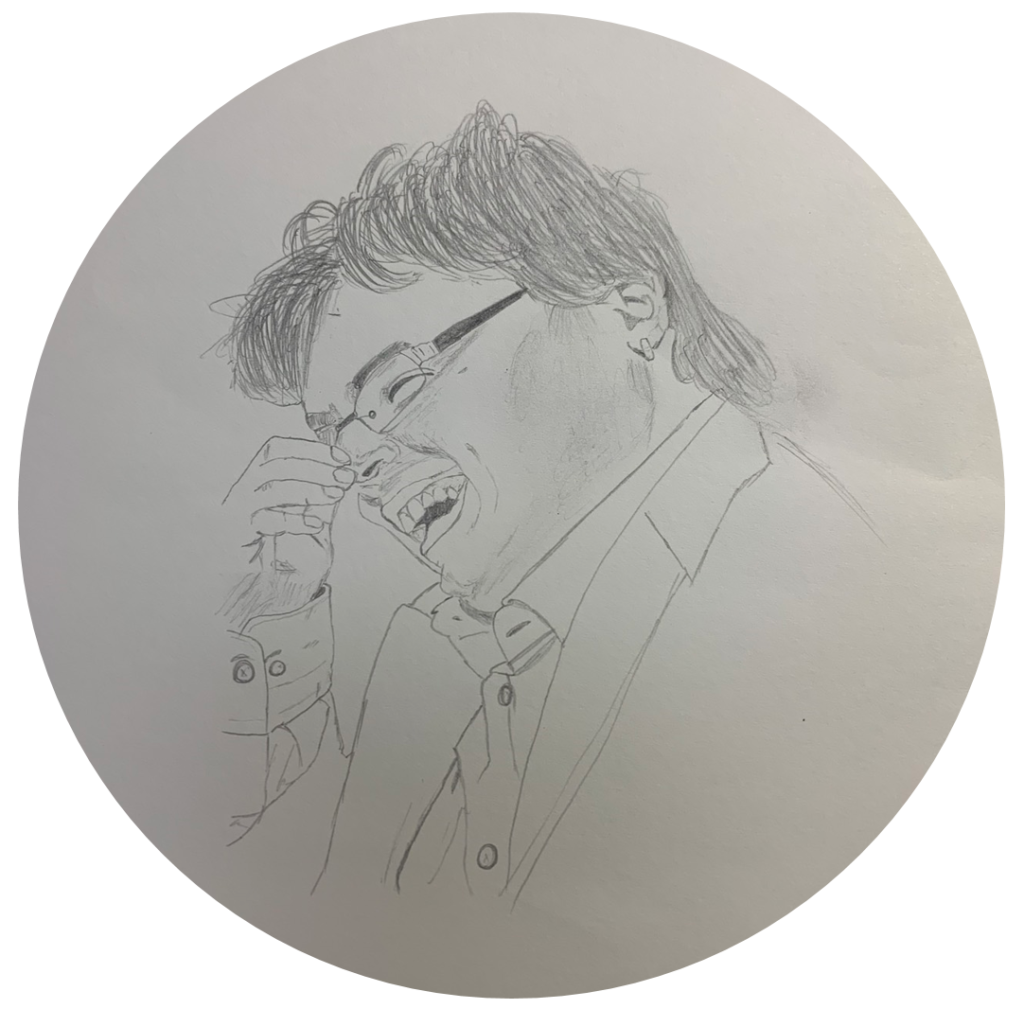
Fehmiju Fati
Composer · computer music
Heartfelt congratulations on bFaaaP going open source!
This system, which lets you control the piano pedal with nothing but the movement of your head while you play, is remarkably flexible to adjust — anyone, from children to the elderly, can master it with ease. I believe it is a system that widens what a performer is able to do.
As an important project for realizing the free wish that “music is for everyone,” I sincerely hope this comes to the attention of as many people as possible.

Keiko Nagasawa
Piano instructor · studio PASTEL
Congratulations on the open-source release.
The pedal is a vital function that greatly shapes the expression of piano playing — yet there are people for whom operating it is difficult for physical reasons.
bFaaaP removes that barrier, and I feel it is a wonderful endeavour that gives form to the player’s wish to “play” and to “express more.”
Because bFaaaP responds even to delicate pedal changes, I believe it will be a great force in helping many people achieve a performance that is truly their own.
Toward a society where everyone can enjoy music and express themselves in their own way, I hope this project reaches even more people.

kyoko
Music lover · amateur choir singer (Tokyo Women’s Choral Society)

Enjoying music as an amateur choir singer, I came to know of “bFaaaP” through a fortunate connection. I was ashamed that until then I had not noticed the people who need assistance to operate the pedal — and at the same time, I was strongly struck by the existence of this wonderful technology.
I still vividly remember the thrill of pressing the pedal for the first time as a child at my piano lesson. Precisely because I once experienced being captivated by the depth of the way the pedal lets sounds resonate richly together, I feel strongly that the wish to express oneself must never be blocked for physical reasons. The right to enjoy music should belong equally to everyone.
I was deeply moved by this open-source initiative. An environment where anyone who needs this technology can access it at any time is, I think, truly ideal. I hope that this release will make “bFaaaP” widely known and — just as a person with weak eyesight wears glasses — that it becomes an option people who need it can use as a matter of course. Through that, I sincerely hope the world of music will become a richer and gentler place.

Midori
Music & healthcare
When you strike the keys and press the pedal, the tones stretch, join and merge — a chemical reaction of sound takes place, and the sound becomes more brilliant, more beautiful. Out of his ardent, deep feeling for music, Mr. Shishido made it possible to set off that chemical reaction even without being able to press the pedal. Hearing him play the piano with bFaaaP moves me deeply.
bFaaaP is a system that was invented when specialists from many different fields connected around Mr. Shishido and set off a chemical reaction of their own. Now that this technology is being released as open source, I hope that reaction will be amplified further still.
Thanks to medicine and other factors, the span of our lives is growing longer. That also means we have to live a long time through the years in which our physical abilities are declining. I believe bFaaaP will support us, so that those years too can be made richer by music.
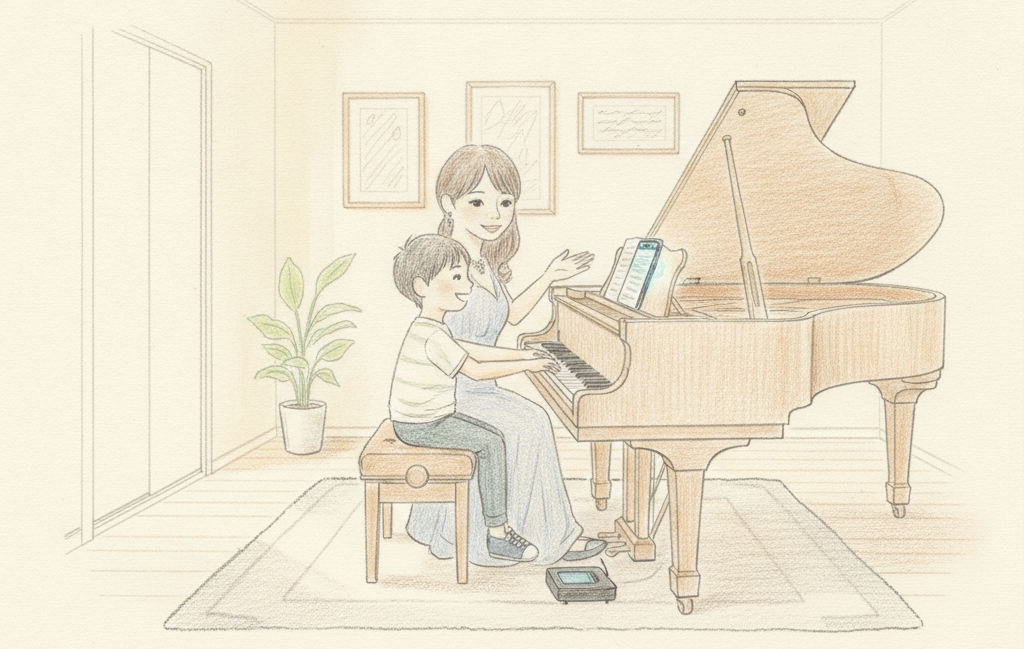
Take a bFaaaP lesson in Tokyo
Two Tokyo piano studios offer lessons and recitals with bFaaaP — beginners and first-timers are warmly welcome.
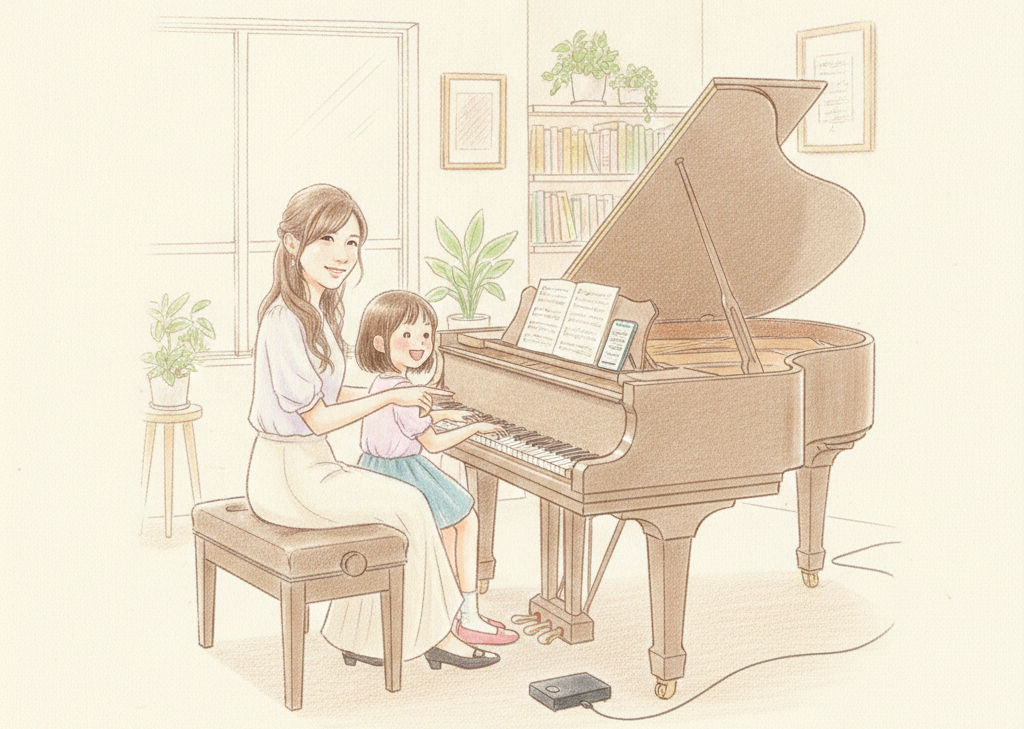
The secret of how the members gathered
How did an architect, a former weather-satellite engineer, a patent attorney, a patent engineer, piano teachers, a tuner, a composer-performer, a doctor, a software engineer and current graduate students come together around one small wish? Our founder tells the whole story — in his own words.
How it works
Your head tilt travels through four small pieces of hardware to the piano pedal.
- 1
Head tilt
ARKit / TrueDepth face tracking on iPhone or iPad measures your head angle.
- 2
iOS app
Maps the angle to a pedal value and paces the radio over Bluetooth (BLE).
- 3
BLE board (nRF52)
Receives the value and bridges it over UART to the controller.
- 4
Pico (RP2040)
Drives the motor (Pro) or closes the switch (Switch) — the pedal moves.
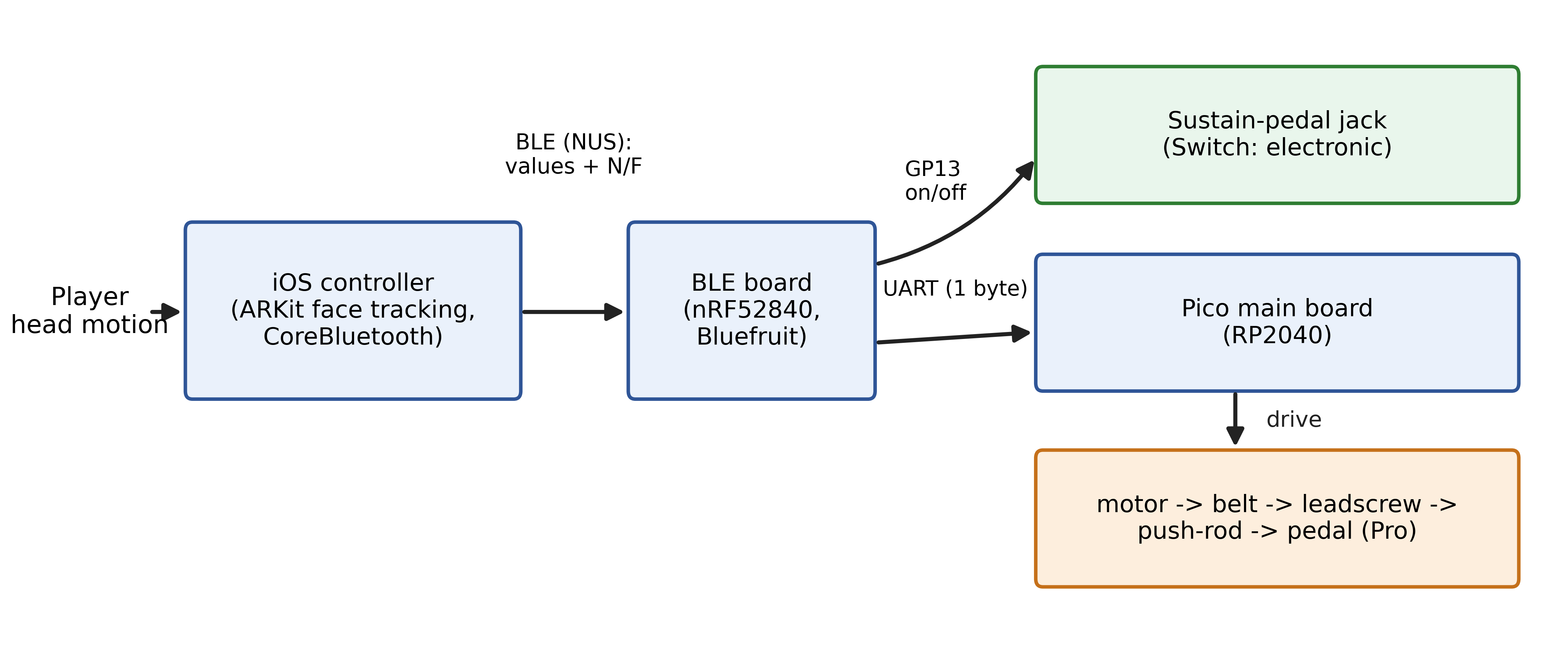
A neat design point: ARKit produces head angles much faster than Bluetooth should send them, so the app paces the radio (a 100 ms timer plus a throttle) to keep the link rock-solid.
Made so anyone can play
bFaaaP exists for people who can’t easily use a foot pedal — and it is open to everyone.
- Players with a leg disability
- Small children whose feet don’t reach
- Older players
- Users with a tracheostomy or limited mobility
Build it yourself
Everything you need to build the device and run the controller is open source. The short version of the Pro line:
- 1.Print & assemble the mechanical parts.
- 2.Wire & flash both boards (VS Code / PlatformIO / Arduino).
- 3.Anchor with the airback; set the travel limit.
- 4.Build & install the iOS app (your own signing team & bundle ID).
- 5.Pair, calibrate, and play.
Three tracks: the iOS app · Pro (acoustic) · Switch (digital).
Bill of materials (Pro, overview)
- iPhone / iPad with a TrueDepth front camera
- Raspberry Pi Pico (RP2040) — main controller
- nRF52840 BLE board — Bluetooth bridge
- Motor + driver and the 3D-printed airback anchor
Stuck on a step? Ask in AI-assisted Support — a maintainer-reviewed Q&A (not instant; real people check each answer).
See it in action
Performances & demonstrations
Years of recitals, science-fair demos and how-to guides — many performed by players who use bFaaaP every day.
Full channel on YouTube ↗Concerts & recitals
The recital of Kyoko Yamaguchi’s piano studio Fleur (August 7, 2026): two pieces — “Etupirka” and “A Whole New World” — followed by a bFaaaP Pro setup walkthrough from 8:11.
At a seven-university joint concert (Toyosu Civic Hall, Sept 5, 2022), members of Tokyo Tech’s Platanus ensemble performed Gustav Lange’s “Blumenlied” (Flower Song, Op. 39) using bFaaaP — a piece whose flowing lines lean heavily on the sustain pedal, here played foot-free by head motion.
A full concert on a grand piano with bFaaaP Pro; includes a live device setup walkthrough at 25:01. The best single video to understand the Pro line end to end.
System intro, the members, and three pieces on an electric piano with bFaaaP Switch, followed by a hands-on workshop.
A polished performance showcasing head-controlled sustain in a live setting.
bFaaaP Pro in a concert-hall recital setting.
Setup & user manual
Step-by-step: align the drive over the sustain pedal, anchor with the air-jack, set the travel limits.
The official operating video: connect to the sustain jack, pick the channel, set on/off type and the head-angle threshold.
A longer walkthrough of how the whole system works, from head tracking to pedal.
Voices & exhibitions
Support
bFaaaP is a volunteer-based open-source project. Shishido & Associates supported it until September 2026. How people take part is up to them — everything below is simply what is open and available.
GitHub
The repository, the issues, and every published source. It is also where a pianist who cannot use the pedals can find out that bFaaaP exists.
Discussions
Where build and usage questions are asked and answered. Anyone can answer one they know. Volunteers write the replies, so they can take weeks — and sometimes none comes.
Build it, or fork it
The build guides, schematics, firmware, CAD and bills of materials are all public. Pull requests that improve the docs are welcome. Carrying bFaaaP forward is already allowed by the licences.
Build one. Share the music.
The hardware, firmware, iOS app, and docs are all open source — in English, 日本語, and Deutsch.